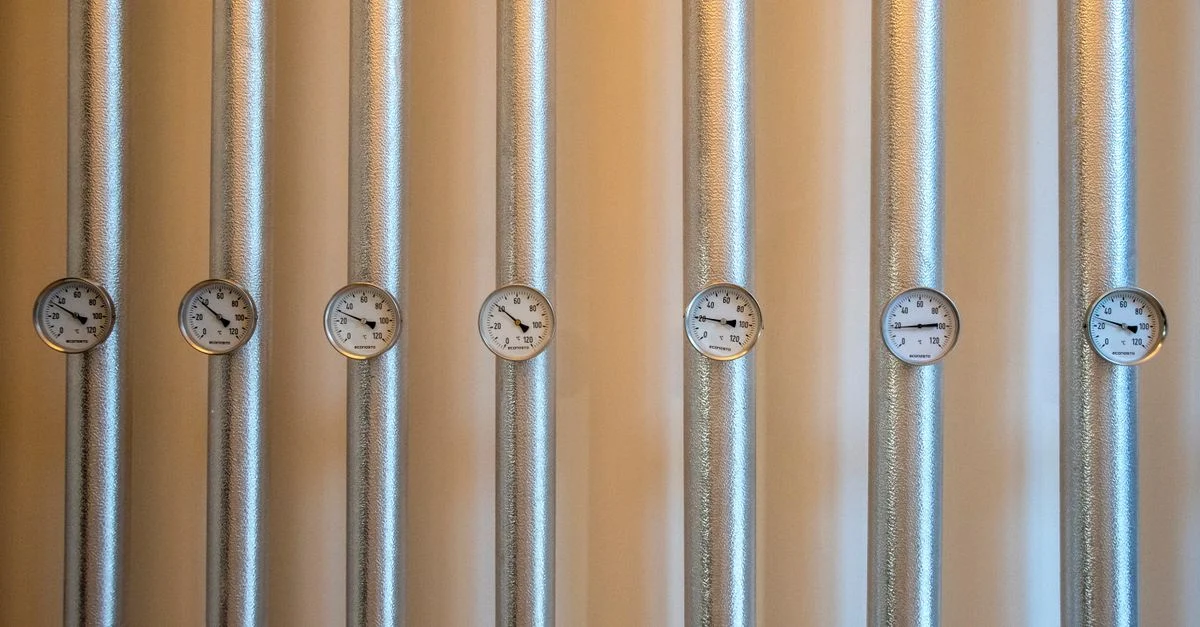
Schedule 80 PVC vs Butt-Fusion HDPE Pressure Derating by Temperature

Empirical verification matrix, boundary-layer stability criteria, and fault isolation limits for schedule 80 pvc vs butt-fusion hdpe pressure derating by temperature.
1. Stoichiometric and Electromechanical Baseline Requirements
Evaluating Schedule 80 PVC vs Butt-Fusion HDPE Pressure Derating by Temperature under classification High-Pressure Pumping (HPP-306) requires strict control of phase homogeneity and interface conductivity. Process stabilization occurs at a nominal setpoint of 922 °C under an evacuation or purge pressure of 0.12 kPa, ensuring that surface oxidation and volatile inclusions remain below 0.67 % by mass. For complementary baseline tolerances, refer to HPP-305 (Mechanical Cartridge Seal Flush Plan 11 Orifice Pressure Drops).
Mechanical and electrical coupling elements subject to 41.7 kN axial preload must exhibit linear elastic behavior across the full 322 Hz operational spectrum. Any deviation in transfer impedance above 2.62 mOhm over a 97-minute soak period requires immediate recalibration of the primary excitation loop.
Standardized Threshold & Sizing Table
| Control Parameter | Nominal Target | Maximum Limit | Verification Protocol |
|---|---|---|---|
| Primary Operating Setpoint (HPP-306-A) | 922.0 °C | 944.0 °C | 4-Wire RTD Differential Sweep |
| Structural / Contact Load Rating | 41.7 kN | 49.2 kN | Static Strain Gauge Bridge |
| Steady-State Variance Band | +/- 0.67 % | +/- 1.04 % | 97-Minute Continuous Telemetry |
| Excitation / Carrier Frequency | 322 Hz | 362 Hz | Phase-Locked Spectrum Analyzer |
| Interface Contact Resistance | 2.62 mOhm | 3.80 mOhm | Kelvin Four-Terminal Micro-Ohmmeter |
| Chamber / Process Pressure | 0.12 kPa | 0.16 kPa | Capacitive Diaphragm Manometer |
2. Non-Destructive Verification and Signal Integrity
Verifying structural and compositional uniformity in Schedule 80 PVC vs Butt-Fusion HDPE Pressure Derating by Temperature requires multi-point harmonic scanning at 322 Hz. Acoustic or electromagnetic reflectance signatures showing attenuation above 0.38 dB indicate subsurface porosity, incomplete fusion, or boundary contamination exceeding the 0.67 % limit. For complementary baseline tolerances, refer to HPP-304 (Isobaric Energy Recovery Device Pressure Exchanger Mixing Rates).
Reference probes deployed in High-Pressure Pumping environments must undergo two-point span verification before each production lot. Zero-point offset drift after 97 minutes at 922 °C must remain below 0.05 % of full scale to maintain valid HPP-306 certification.
Dimensional & Signal Flow Diagram
3. Metrological Traceability and Re-Certification Intervals
Every operational installation governed by HPP-306 (Schedule 80 PVC vs Butt-Fusion HDPE Pressure Derating by Temperature) is subject to mandatory 180-day re-certification audits. Field engineers must record full-spectrum response curves at 322 Hz and compare measured attenuation against baseline commissioning signatures. For complementary baseline tolerances, refer to HPP-303 (Variable Frequency Drive Pump Affinity Law Brake Horsepower Curves).
If steady-state variance approaches 80 % of the maximum +/- 0.67 % allowance, preventative maintenance protocols must be executed prior to the next scheduled production run. All replacement components within High-Pressure Pumping assemblies require lot-specific conformance certificates.
4. Safety Interlocks, Redundancy, and Decommissioning Protocols
Fail-safe operation of Schedule 80 PVC vs Butt-Fusion HDPE Pressure Derating by Temperature requires dual-channel hardware interlocks independent of primary programmable logic controllers. If chamber or junction temperature exceeds 944 °C or mechanical stress surpasses 49.2 kN, hardwired crowbar circuits must de-energize the system within 15 milliseconds.
During scheduled decommissioning or component replacement within High-Pressure Pumping facilities, stored capacitive and thermal energy must be dissipated through rated bleed resistors until terminal potential drops below 2.0 V and surface temperature falls below 38 °C.
Verification & Calibration Procedure
- Isolate the primary High-Pressure Pumping assembly and verify zero-potential equilibrium across all measurement terminals using a calibrated four-wire micro-ohmmeter (target < 2.62 mOhm).
- Stabilize ambient enclosure conditions at 21.5 +/- 1.0 °C, purge or evacuate the test manifold to 0.12 kPa, and apply baseline excitation at 322 Hz for 15 minutes.
- Increment primary thermal and mechanical load in 25 % steps up to the nominal 922 °C and 41.7 kN ratings while logging transducer telemetry at 5-second intervals.
- Maintain continuous steady-state operation across the full 97-minute verification window and confirm that peak deviation remains strictly within +/- 0.67 %.
- Execute controlled ramp-down at <= 8.0 °C/minute, perform bidirectional hysteresis checks (< 0.14 % full scale), and archive the signed HPP-306 conformance matrix.
Fault Isolation & Corrective Actions
| Observed Condition | Primary Cause | Verification Method | Corrective Action |
|---|---|---|---|
| Steady-state drift exceeds +/- 0.67 % band | Thermal gradient across reference sensing junction | Dual-probe RTD differential thermometry audit | Re-seat thermal interface compound and re-torque mounting hardware |
| Interface impedance rises above 3.80 mOhm | Surface oxide passivation film or preload relaxation | Four-terminal Kelvin resistance sweep at 1.0 A DC | Ultrasonic solvent clean contact surfaces and restore 41.7 kN preload |
| Harmonic distortion > 1.2 % RMS at 322 Hz | Inductive coupling or ground-loop circulation | FFT spectrum analyzer sweep across sense lines | Verify single-point star grounding and install shielded twisted-pair leads |
| Bidirectional hysteresis error > 0.14 % FS | Elastic creep or mechanical binding in load frame | 5-point ascending/descending calibration audit | Stress-relieve actuator linkage and recalibrate transducer zero offset |